Posted on
Y-Fronts: The Chicago Invention Britain Made Its Own
"Y-fronts" is one of the most British-sounding words in the underwear drawer — right up there with "pants" itself. Except it isn't British at all. It was invented in Chicago, patented by an American, and first sold during a blizzard on State Street. Britain just adopted the name, gave it a nickname's staying power, and never let go — even as the style itself has spent the last few years quietly losing ground to trunks and boxer briefs.
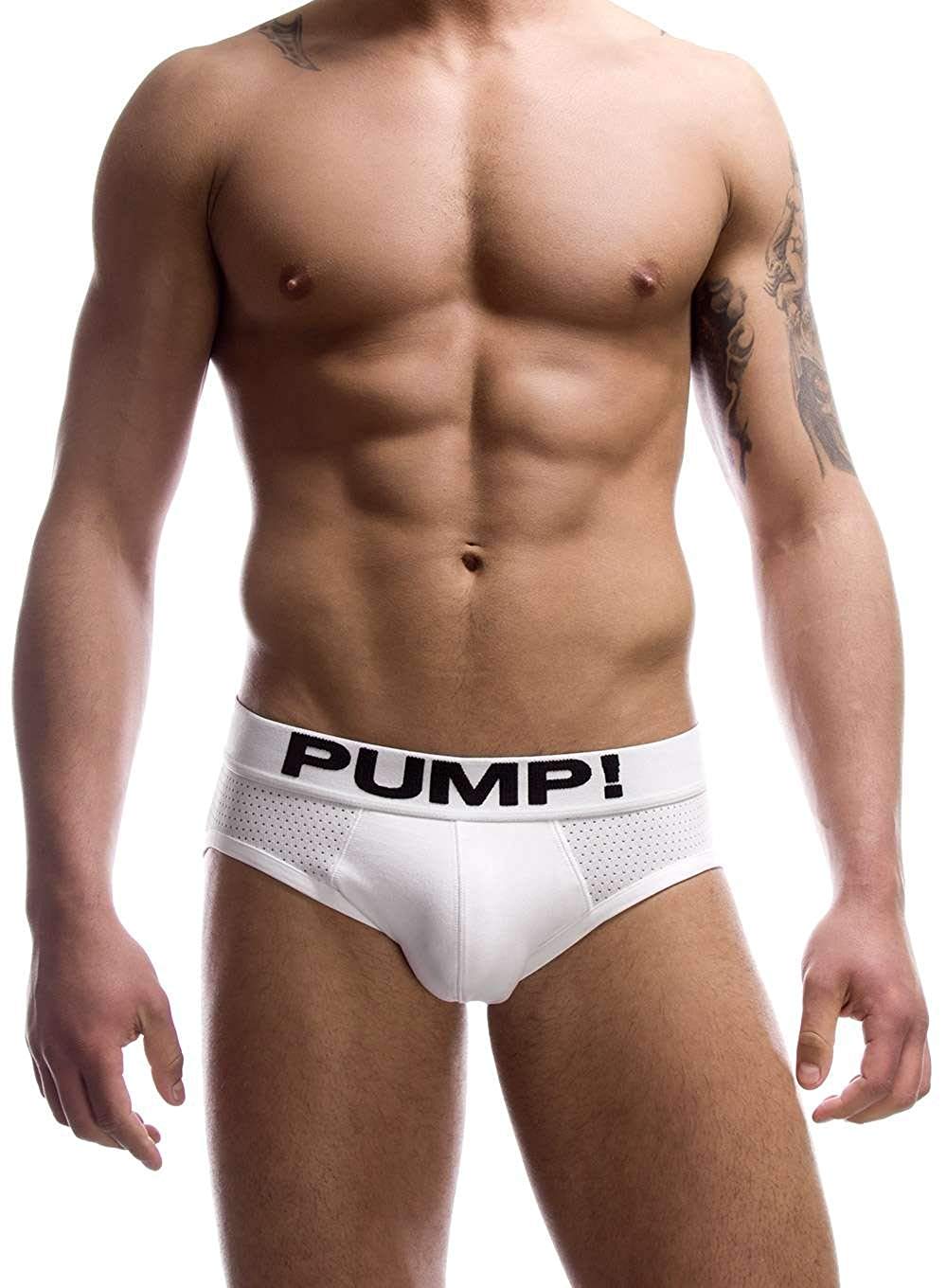
A Y-front is a specific style of brief: no leg sections, and a Y-shaped overlapping front fly (that's literally where the name comes from). It's not a synonym for "brief" in general — it's the original brief design that every modern brief descends from. Browse the style itself in our Men's Briefs collection.
The invention: a postcard, a patent, and a blizzard
In 1934, apparel engineer Arthur Kneibler — working for Coopers, Inc. in Chicago — received a postcard from the French Riviera showing a man in a snug, bikini-style swimsuit. It inspired him to design a men's undergarment with no leg sections at all, held together with an overlapping, Y-shaped fly. He filed the patent (US 2,019,140) on 29 May 1935. Coopers sold the world's first briefs on 19 January 1935, at Marshall Field's flagship store on State Street, Chicago — in the middle of a blizzard. They sold out their first 600 packages by noon, shifted another 12,000 in the following weeks, and had reportedly sold around 30,000 pairs within three months of launch. The brand later became Jockey, and the Y-Front trademark is now recognised in 120 countries.
- 1934 Arthur Kneibler designs the Y-front at Coopers, Inc., Chicago, inspired by a French Riviera postcard.
- Jan 1935 First sold at Marshall Field's, Chicago, during a blizzard — 600 packages by noon.
- May 1935 US patent 2,019,140 filed.
- 1936 First international licence signed, with J.R. Moodie of Canada; European export agents begin placing orders the same year.
- 1938 Y-fronts go on sale in Britain for the first time, at Simpsons of Piccadilly, London.
Sources: Jockey, Our History; Smithsonian Magazine; Jockey International Inc., FundingUniverse.
Britain's turn: 3,000 pairs a week from one Piccadilly shop
The Y-front crossed the Atlantic remarkably fast for 1938. It went on sale in Britain that year at Simpsons of Piccadilly — then one of London's most fashionable menswear stores — and was reportedly soon selling 3,000 pairs a week from that one location alone. It's a genuinely odd historical footnote: an all-American design, sold in a very British department store, under a very British-sounding name that America itself never adopted for the garment.
"Y-front" vs "tighty-whities": two nicknames, two countries
Britain named the garment after its construction (the Y-shaped fly). America, decades later, named it after its colour and fit instead: "tighty-whities," a nickname that only really took hold in the late 20th century and has always been used at least half-jokingly. Where "Y-front" is a fairly neutral, almost technical description, "tighty-whities" carries real cultural baggage — shorthand in American pop culture for nerdiness, youth and vulnerability (think Clark Kent, not James Bond). It's the same garment wearing two very differently loaded names on either side of the Atlantic.
Source: Why Are Tighty Whities Associated With Pantsing?, Factually.
The Beckham effect: how briefs got fashionable again
For decades the classic white brief was seen as purely functional — practical, unglamorous, your dad's underwear. That changed in 2008, when David Beckham fronted a reported $20m, three-year Emporio Armani campaign shot in close-fitting white briefs, with billboards going up simultaneously in New York, London, Paris, Milan, Rome and Tokyo. It's widely credited with a broader shift in how briefs were perceived — from purely practical to genuinely fashionable — and it's a useful reminder that the brief's image problem was never really about the garment itself, just how it was marketed.
Source: David Beckham strips off for Giorgio Armani ad, Campaign.
How popular are Y-fronts, really?
Search volume only tells you what people type into a box. A better measure of a style's real health is what people actually buy — and on that front, the picture is more nuanced than "dying" or "timeless":
By revenue, boxer briefs are already the largest single style in the UK market (roughly 34% share in 2024) and trunks are the fastest-growing, while the classic brief — Y-fronts included — is the more mature, slower-moving part of the market. That's a real shift in what men are buying, not just a quirk of search behaviour. Set against that, though, is the brand that started it all: Jockey, the company that invented the Y-front in 1934, is still reported as the number one selling men's underwear range in the US today — a reminder that "maturing category" doesn't mean the market leader is struggling.
Sources: market segment analysis, Grand View Research / Research and Markets, UK men's underwear market reporting, 2024; Jockey and the history of the Y-front, Vada Magazine.
For reference: what people search
Search data is a smaller, supporting data point rather than the headline here — but for what it's worth, it tells a consistent story. The UK searches "Y-fronts" more than ten times as often per capita as the US does, where the garment is simply called a "brief":
| Market | "Y-fronts" monthly searches |
|---|---|
| United Kingdom | 1,500/mo |
| United States | 600/mo |
| Australia | 200/mo |
| Ireland | 90/mo |
| New Zealand / Canada | 60/mo each |
UK search interest has also drifted down gently rather than fallen off a cliff — roughly 15% lower in 2025 than in 2019:
Source: Ahrefs Keywords Explorer, UK/US/AU/IE/NZ/CA average monthly search volume and UK annual search history for "y fronts," pulled July 2026. Used here as a supporting reference point, not the main measure of popularity.