History of the Jockstrap: From 1874 to Fashion Icon
The jockstrap has gone from a Victorian cycling aid to a global fashion underwear staple in just 150 years. Here's the full story — and why it's more relevant than ever.

The Origins of the Jockstrap
As you've probably guessed, the history of the jockstrap started in the world of sport. More specifically — cyclists who were having a rough time on the cobbled streets of Boston, Massachusetts. Too much jostling and... well, you can imagine. The jockstrap was designed by the company BIKE in 1874 as an "athletic supporter" that would protect cyclists as they navigated the brutal road surfaces of the era. Hence the brand name 'BIKE' — which, if you've seen it on a modern jock, may well have you thinking the wrong thing.
In fact you may assume that the word 'jockstrap' is simply something that an American 'jock' straps himself into. But it actually comes from the original name of the garment — the 'jockey strap' — not for a jockey on a horse, but a 'jockey' on a bike, or a deliveryman navigating city streets. Interestingly, the word 'jock' meaning 'athlete' derives from the fact they wore jockstraps — not the other way around. Love a bit of etymology.
The Jockstrap Gets a Hard Cup
Wider usage of the jockstrap came in 1927 when a Canadian company added a hard protective cup to give athletes protection against stray hockey pucks and studded boots. This innovation transformed the jockstrap from a comfort garment into a genuine piece of protective equipment, and it became a staple for North American athletes — without ever quite gaining the same mainstream adoption in Europe.
You may not be aware but there are numerous types of athletic jockstraps — from swimmer jocks designed to protect a swimmer's modesty under his trunks, to the traditional thick-banded athlete's jockstrap. For hockey you can get versions with garter hooks to attach socks, and super-protective styles for goalkeepers. The mind boggles.
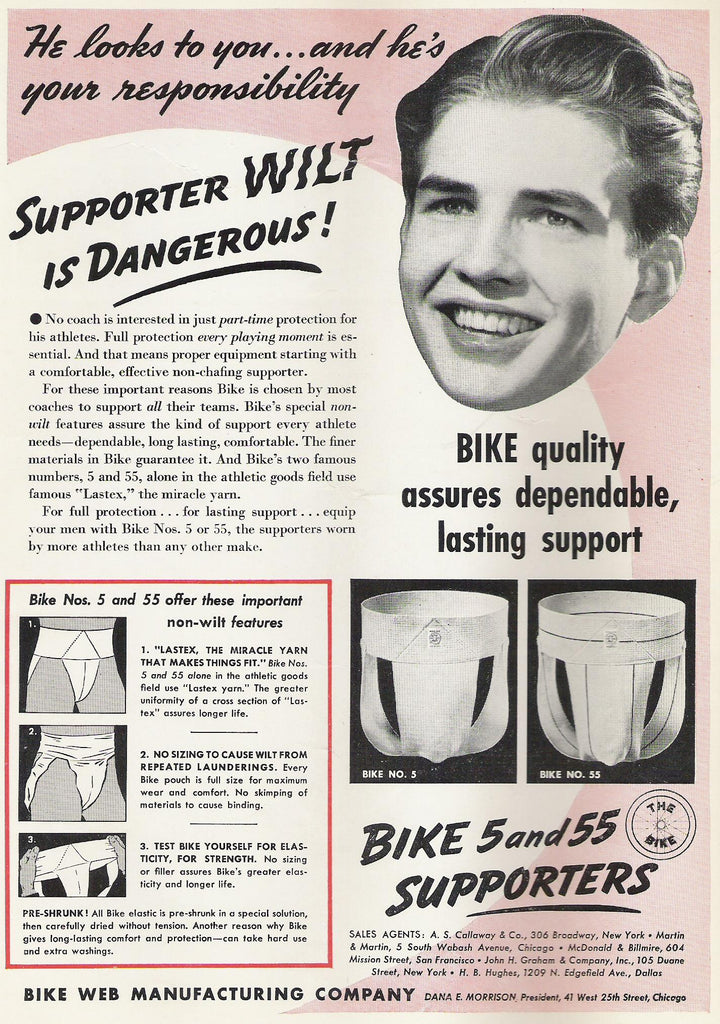
1941: Avoid the dreaded Supporter Wilt!
The Jockstrap Falls Out of Fashion
In the 1980s and 1990s the jockstrap began to fall out of fashion as athletes moved towards compression shorts and moisture-wicking performance underwear. For a period it seemed the jockstrap might fade into sporting history — a relic of a pre-lycra era when men had fewer options and more cobblestones.
But the jockstrap is remarkably resilient. By the 2000s a full-scale fashion revival was underway, driven by underwear brands that recognised the jockstrap's unique combination of support, ventilation and visual impact. Mainstream fashion brands incorporated jock-inspired styles into their underwear ranges, and a new generation of specialist underwear brands pushed the design further — experimenting with fabrics from mesh to microfibre, and silhouettes from brief-jocks to sport jocks.
The Modern Fashion Jockstrap
Today the jockstrap occupies a genuinely interesting position in men's underwear — simultaneously practical and fashion-forward. The core design hasn't changed fundamentally since 1874: a waistband, a front pouch and two straps around the buttocks. But within that framework, designers have found extraordinary variety.
Calvin Klein played a significant role in bringing the fashion jockstrap to mainstream attention — their iconic advertising campaigns of the 1990s and 2000s featuring model-athletes in minimal underwear helped shift perception of the jockstrap from purely functional to genuinely desirable. The Calvin Klein aesthetic — clean lines, neutral colours, confident fit — influenced an entire generation of underwear design and remains a reference point for the category today. Read our full history of Calvin Klein underwear and its most iconic models.
Modern jockstraps come in everything from functional sport styles built for high-intensity training to fashion jocks designed purely for their aesthetic impact. Fabrics have evolved from cotton webbing to performance microfibre, mesh, sheer fabric and even faux leather. The brief-jock hybrid — which adds side panels for additional coverage — has become one of the most popular underwear styles of the past decade.
At BANG&STRIKE we stock jockstraps across our own STRIKE PRO range as well as from leading brands including Pump!, Modus Vivendi and Teamm8 — covering everything from performance sport jocks to statement fashion pieces.

Why Do Men Wear Jockstraps?
The reasons men wear jockstraps today are more varied than ever. For sport and the gym, the jockstrap remains the most effective garment for support and ventilation — the open back design allows full airflow while the pouch provides structured support that waistband-only styles can't match. For many men, particularly those who train regularly, a good sport jock is simply the most functional underwear option available.
Beyond function, the fashion jockstrap has become a confident style choice. The bare-back design is inherently bold, and the range of fabrics and colours available means the modern jockstrap works as a statement piece in a way that conventional underwear simply doesn't. The resurgence of the jockstrap in mainstream fashion underwear reflects a broader shift in how men think about their underwear — as something worth investing in, rather than an afterthought.
Frequently Asked Questions About Jockstraps
The jockstrap was invented by the BIKE Athletic Company in 1874. It was originally designed as an "athletic supporter" for cyclists navigating the rough cobblestone streets of Boston, Massachusetts. The company went on to become one of the largest producers of athletic supporters in the world.
The name comes from the original term "jockey strap" — named after the bicycle jockeys (delivery riders) who wore them, not horse jockeys. Over time "jockey strap" was shortened to "jockstrap" and the word "jock" came to mean athlete more broadly, because athletes wore jockstraps.
Jockstraps were originally designed to provide support and protection for male athletes during sport. Today they serve two main purposes — functional sport jocks provide support and ventilation during exercise, while fashion jockstraps are worn as underwear for their aesthetic design and comfort. The open back design provides maximum ventilation, making jockstraps particularly popular for gym use and warm climates.
The fashion jockstrap revival began in the late 1990s and accelerated through the 2000s as specialist men's underwear brands began experimenting with jock-inspired designs. By the 2010s the jockstrap had become a mainstream men's underwear style, stocked by major fashion brands and available in a wide range of fabrics, colours and designs far removed from its sporting origins.
Yes — jockstraps are arguably the most functional underwear option for gym use. The structured front pouch provides support during dynamic movement, while the open back design allows full ventilation and prevents the overheating that can occur with full-coverage underwear during intense exercise. Performance jockstraps made from moisture-wicking microfibre are particularly effective for training.
A brief provides full coverage front and back, while a jockstrap has a front pouch supported by a waistband and two straps that frame the buttocks, leaving the back exposed. Jockstraps provide more ventilation and a more athletic fit, while briefs offer more coverage and are generally better for everyday wear. Brief-jocks — a hybrid of both styles — add partial side panels for additional coverage while retaining the open back.
Shop Jockstraps at BANG&STRIKE
From performance sport jocks to bold fashion styles — browse our full jockstrap range including STRIKE PRO, Pump!, Modus Vivendi and Teamm8.
SHOP JOCKSTRAPS