

Hugo Boss Underwear History
Posted on
Hugo Boss.
A Century of Quiet Power.
Metzingen, 1924. A Clothing Factory.
Hugo Ferdinand Boss was born in 1885 in Metzingen, a small town in Baden-Württemberg, Germany. The youngest of five children, he completed a merchant's apprenticeship, served in the military, worked in a weaving mill, and eventually took over his parents' lingerie shop in 1908. A practical man building a practical career.
After serving in World War One, Boss founded his clothing company in 1923 and established his factory the following year — 1924, the date now recognised as the brand's founding. Initially producing shirts, jackets, work clothing, sportswear and raincoats. Nothing remarkable yet. Just a man making clothes in a small German town.
"From a small clothing factory to one of the most recognised fashion names in the world — a century of reinvention, not without its shadows."
The History Worth Knowing
No honest account of Hugo Boss omits what happened in the 1930s and 1940s. Hugo Boss joined the Nazi party in 1931. During World War Two, his factory produced uniforms for the Nazi party and affiliated organisations. The factory also used forced labour — prisoners of war and concentration camp inmates among them.
In 2011, the company commissioned a formal independent historical investigation into its wartime activities. The resulting report confirmed the use of forced labour and Hugo Boss's Nazi party membership. The company issued a formal apology, acknowledging the injustice and suffering caused during this period.
Hugo Boss the man died in 1948. The current Hugo Boss company has been owned by a succession of external investors since the 1960s and is today a publicly listed global corporation with no ideological connection to its wartime past. The history is acknowledged. The apology is on record. The company has moved on — but it is part of the full story.
The Suit That Defined A Generation
By 1960 the company was producing off-the-peg suits. By 1970 the first Boss-branded suits were in production. The brand became a registered trademark in 1977 and grew rapidly through the 1980s as the defining symbol of corporate ambition and masculine elegance. The Hugo Boss suit became shorthand for success. If you were going places, you wore it.
That decade cemented something important — Hugo Boss wasn't a fashion brand in the experimental sense. It was a brand for men who wanted to look exactly right without drawing attention to the effort. Precise. Controlled. Quietly powerful. An aesthetic that has never really gone out of style because it was never really about style. It was about confidence.
"The Hugo Boss suit became shorthand for ambition and achievement — understated authority at its most precise."
One Hundred Years In Brief
Hugo Ferdinand Boss establishes his clothing factory in Baden-Württemberg, Germany. Work clothing, shirts, sportswear. A practical start.
Boss joins the Nazi party in 1931. The factory produces uniforms for the regime and uses forced labour. Hugo Boss dies in 1948. The company later commissions an independent report and issues a formal apology in 2011.
The first Boss-branded suits go into production in 1970. The brand becomes a registered trademark in 1977 and begins its ascent as the defining menswear label of corporate ambition.
Hugo Boss becomes a symbol of 1980s success. Motorsport partnerships begin with Niki Lauda. The brand expands into fragrance, accessories, sportswear — and underwear.
The brand establishes the Hugo Boss Prize — awarded every two years to an artist working in any medium anywhere in the world, administered by the Guggenheim Museum. One of the most prestigious art prizes in existence.
Hugo Boss marks its centenary as a publicly listed global corporation operating in over 110 countries, with revenues exceeding €4 billion annually. A long way from Metzingen.
Where the Aesthetic Starts
Hugo Boss has produced men's underwear since the 1980s and it became one of the brand's most quietly successful categories. Reflecting exactly the same principles as the suits — clean lines, premium materials, understated branding, precise construction. Not about bold statements or fashion experimentation. About doing the basics exceptionally well.
The wide logoed waistband became one of the most recognised in men's underwear. The cotton and modal fabrications set a benchmark for everyday comfort. The fit — designed to work for real men living real lives — became the definition of quiet luxury in underwear form. Hugo Boss underwear is what you wear when you don't need to make a point. When the confidence is already there.
"Quiet luxury in underwear form — doing the basics so well that the basics stop being basic."
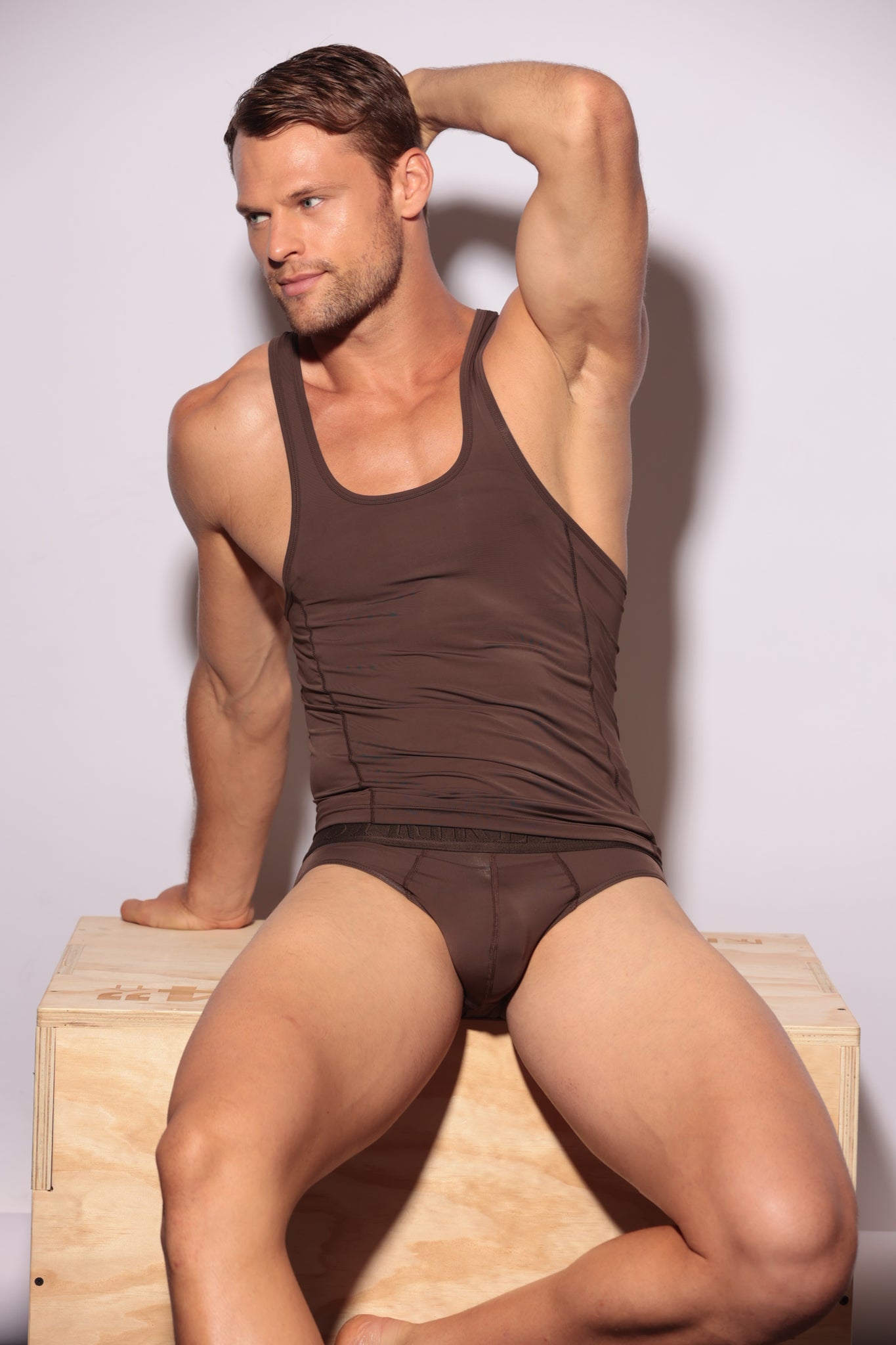
BANG&STRIKE no longer stocks Hugo Boss underwear. But the sensibility it represents — clean, minimal, premium, considered — is exactly what we've built Strike Pro around. Same principles. Independent spirit. Without the conglomerate markup.
The Same Principles. Our Own Label.
Clean lines, premium fabrication, precise construction. Strike Pro Core Cotton and Microfibre — built on the same belief that the basics deserve to be done properly.


Twenty Years of Getting it Right
Premium men's underwear. Free UK delivery on orders over £40. Since 2006.
Shop All Underwear


